When choosing an overhead crane, some buyers naturally want the crane to cover as much of the workshop as possible.
It sounds reasonable. A longer span means the crane can reach a wider working area. Why not make it longer if the budget allows?
Because a longer span is not automatically a better solution.
And sometimes, it means paying for something your production process doesn’t actually need.
Start with the working area, not the building width
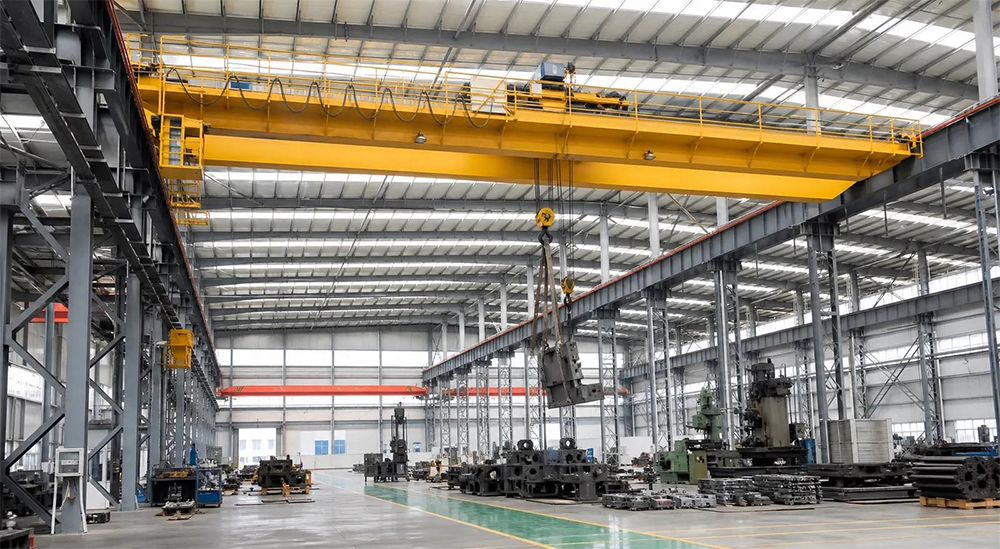
One thing worth understanding is that the crane span and the workshop width are not necessarily the same thing.
The span is the distance between the runway rail centerlines. It is determined by the building structure and the required working area.
You don’t necessarily need the crane to cover every corner of the workshop.
For example, if the main lifting operations take place within a defined production area, extending the crane across the entire building may bring little practical benefit.
What matters is whether the crane can reach the places where lifting actually takes place.
I’d rather see a crane cover the right working area than simply make it as wide as possible.
A longer span affects more than coverage
Span is not just a dimension on a drawing.
As the span increases, the bridge structure and its design requirements also need to be considered. Depending on the capacity, duty and structural arrangement, a longer span may require a different girder design and more attention to deflection and structural strength.
That can affect the overall crane cost.
It may also affect the requirements placed on the building and runway structure.
So if you are comparing two crane proposals, don’t assume the one with the longer span is automatically offering more value.
Ask whether that extra coverage is actually useful for your work.
What should you check before deciding?
Before confirming the span, I’d look at three things:
Lifting positions: Where will materials actually be picked up and placed?
Working area: Does the crane need to serve the full workshop or only specific production zones?
Building structure: Can the runway arrangement support the proposed crane design?
A workshop drawing is a good starting point. Marking the actual lifting and material handling positions on it is even more useful.
This helps avoid two common mistakes: choosing a span that is too short for the work, or paying for coverage that will rarely be used.
My View
I wouldn’t recommend a longer-span crane just because it looks more capable on paper.
The crane should fit the way your workshop operates.
If a wider span is necessary to reach important working areas, then it makes sense. If those extra metres serve no real purpose, they may simply increase the cost and design requirements.
Choose the span based on where the work happens, not on how much of the building you want the crane to cover.
Contact Our Engineering Team
Related Posts