Most of the Time, That’s the Wrong Question.
A few years ago, someone asked me a question that I’ve heard many times since.
“Our maximum load is around 18 tons. Do we really need a 20-ton crane, or can we save some money with a 16-ton model?”
It sounded like a simple pricing question.
It wasn’t.
The discussion that followed had very little to do with crane capacity.
It had everything to do with how the crane would actually be used.
That’s something I think many buyers underestimate.
Most people start with the wrong number.
When a project begins, the first number everyone talks about is capacity.
10 tons.
20 tons.
50 tons.
It’s easy to understand because it’s visible.
But if I had to choose only one question to ask before recommending a crane, it wouldn’t be:
“How heavy is the load?”
I’d ask:
“What does a normal working day look like?”
Those two questions often lead to completely different answers.
Imagine two factories.
Both need to lift 20 tons.
On paper, they have exactly the same requirement.
The first factory lifts a machine once every few days during maintenance.
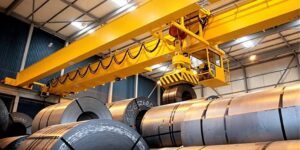
The second moves steel coils every few minutes for two shifts a day.
Should they buy the same crane?
I don’t think so.
Neither would most experienced engineers.
Capacity tells me what the crane can lift.
Usage tells me how the crane will survive.
I’ve seen buyers spend weeks comparing quotations.
They compare steel structure.
Motor brands.
Control systems.
Paint colors.
Almost nobody spends enough time talking about how the crane will actually be used.
Ironically, that’s usually where the expensive mistakes begin.
A cheaper crane isn't always the cheaper decision.
Let’s say choosing a smaller crane saves ten percent today.
Sounds reasonable.
Now imagine that three years later production increases.
The lifting frequency doubles.
The crane starts working far harder than anyone expected.
At that point, the money saved during purchasing suddenly looks very small compared with production downtime, maintenance costs, or replacing the equipment earlier than planned.
When people ask me whether they should buy a smaller crane, I usually ask another question.
How confident are you that your factory will still be doing exactly the same work five years from now?
Very few people can answer that with certainty.
Future changes are rarely included in today's quotation.
Factories change.
Production changes.
Products change.
Sometimes customers change.
Yet many crane decisions are still made as if nothing will ever be different.
That’s understandable.
Budgets are always limited.
But if there’s one thing industrial projects have taught me, it’s this:
The crane you buy today will probably see a very different factory five or ten years from now.
A little flexibility at the beginning often costs far less than replacing equipment later.
Bigger isn't always better, either.
This probably surprises people.
After everything I’ve just said, you might think I’m suggesting everyone should buy the biggest crane they can afford.
I’m not.
Oversizing creates its own problems.
Higher investment.
More building requirements.
Higher operating costs.
The goal has never been to buy a bigger crane.
The goal is to buy the crane that still makes sense years after it’s installed.
There’s a difference.
My Perspective
If someone asked me what buyers focus on too much, I’d probably say capacity.
Not because capacity isn’t important.
It obviously is.
But capacity is only one line on a specification sheet.
A crane spends its entire life responding to everything that isn’t written on that sheet.
How often it’s used.
Who operates it.
What environment it works in.
How production changes over time.
Those things rarely fit into a quotation request.
Yet they’re often what determine whether a crane becomes a good investment—or an expensive lesson.
Contact Our Engineering Team
Related Posts