
Why Can’t You Just Give Me a Crane Price?
A customer once asked me: “Why can’t you just give me a price?” Fair question. He wasn’t asking for a final quotation. He just wanted to know roughly what a 20-ton overhead crane would cost. So why not just give him a number? Because 20 tons is not enough information to price a crane properly. I can give you a number based on 20 tons. But I don’t want to give you a number based on assumptions that may be wrong. A 20-ton crane working in a general workshop may have a very different configuration from a 20-ton crane working in a steel plant. The capacity is the same. The job isn’t. How many hours will it work each day? What will it lift? Is 20 tons the normal load or just the maximum? How high does it need to lift? How far does it travel? Will it work indoors or outdoors? These aren’t questions just for filling out a technical sheet. They affect the crane itself. Can’t you just give me an approximate price? Yes, if that’s what you need. For an early-stage project, I can give you a rough budget based on limited information. But I’d make it clear that it’s a preliminary estimate. There is a big difference between: “A crane like this may cost around $X.” and: “This is the price for your crane.” The second one means we’ve already made decisions about the design and configuration. That’s where things start to matter. Custom Solution More expensive doesn’t automatically mean better I’ve also seen buyers assume that the higher quotation must be the safer choice. I don’t agree with that. If a crane is going to work continuously in a demanding production environment, a more robust configuration may make sense. But if the crane only works occasionally, paying for specifications that you don’t really need doesn’t necessarily give you more value. The same works in the other direction. A very low price isn’t automatically a problem either. Maybe the supplier has simply chosen a more economical design. The question is: Why is the price different? That’s what I would want to understand before comparing the two quotations. What I actually need from a customer You don’t need to know every crane specification before you contact us. That’s part of our job. For the first discussion, basic information is usually enough: Capacity. Span. Lifting height. Working frequency. What the crane will handle. And something about the working environment. If you have a drawing or some photos, even better. If you don’t have everything yet, that’s fine. Tell me what you know. We can work out the rest together. Custom Solution One Last Thought I don’t mind when a customer asks for a quick price. I’d probably ask for one too. But if you want a quotation you can actually compare with other suppliers, there has to be some understanding behind the number. A crane isn’t just a 20-ton machine. It’s a piece of equipment that has to work in a particular factory, doing a particular job. So before I give you a price, I’d rather spend a few more minutes understanding that job. I’d rather give you the right price than give you a very accurate price for the wrong crane. Contact Our Engineering Team Related Posts
Why Are Crane Prices So Different?
One thing I notice quite often is that buyers compare crane quotations by looking at the final price first. It’s understandable. If one supplier quotes $35,000 and another quotes $48,000, the difference is impossible to miss. But before deciding that one supplier is simply too expensive, I’d ask a different question: Are they actually quoting the same thing? A 20-ton overhead crane sounds like a very specific product. It isn’t. The 20-ton capacity tells you how much the crane can lift. It doesn’t tell you how often it will work, what it will handle, or what kind of working conditions it will face. And those things matter. A crane working a few hours a day in a general workshop doesn’t necessarily need the same design as a crane running continuously in a production plant. The lifting capacity may be identical. The requirements are not. This is one of the main reasons two suppliers can receive the same inquiry and still come back with different prices. They may be making different assumptions about the job. One supplier may be focusing on keeping the initial investment down. Another may be allowing for heavier working conditions or longer operating hours. Neither approach is automatically wrong. The important question is whether the assumption matches your factory. More expensive doesn’t always mean better This is something I think buyers should keep in mind. A supplier may recommend a more robust configuration because they expect the crane to work hard every day. If downtime would stop an important production process, spending more on the crane may be perfectly reasonable. But that doesn’t mean every factory needs the most expensive configuration. If a crane only works occasionally, paying for specifications that will rarely be used may not make much sense. You’re not necessarily buying more reliability. You may simply be buying more capacity than you need. That’s why I don’t like the simple rule of: “Choose the more expensive crane because it’s safer.” Good engineering isn’t about making everything bigger. It’s about making the equipment fit the job. Custom Solution The same is true for the cheapest quotation A low quotation isn’t automatically a bad one. Sometimes a supplier has simply found a more economical design that still meets the actual requirements. That’s a good thing. The problem is when the low price comes from a different understanding of the project. Maybe the working frequency was underestimated. Maybe some equipment or services aren’t included. Maybe the supplier assumed conditions that don’t actually exist in your factory. This is why, when I see a large price difference, I wouldn’t immediately ask: “Why are you more expensive?” I’d ask: “What’s different between your proposal and the other one?” Then I’d ask: “What assumptions did you make when designing this crane?” Those questions usually tell you much more than the price itself. Don’t compare every number too quickly This is another mistake that’s easy to make. Buyers often put two quotations side by side and compare motor power, wheel size, travel speed and steel weight. But bigger numbers don’t automatically mean a better crane. I’d rather know why the supplier selected those numbers. Why this motor? Why this duty level? Why this control system? Why this structure? If the supplier can explain the reason clearly, that’s useful. If the answer is simply “because it’s better”, I’d keep asking questions. Custom Solution So how should you look at the price? I’d keep it simple. Before comparing the final numbers, make sure the two quotations are based on the same basic conditions. Then look at what is actually included. After that, ask what each supplier believes the crane will be doing in your factory. Once you understand those things, the price difference becomes much easier to judge. Sometimes you’ll find that the expensive quotation isn’t necessary. Sometimes you’ll find that the cheaper quotation leaves out something important. And sometimes you’ll discover that both suppliers are offering reasonable solutions, just with different priorities. One Last Thought I don’t think the goal of comparing crane quotations is to find the lowest number. It’s to understand what you’re getting for that number. A crane may stay in your factory for twenty years. The price difference you’re looking at today may be forgotten in a few months. What won’t be forgotten is whether the crane actually fits the way your factory works. So before asking which supplier is cheaper, I’d ask a more useful question: Which proposal makes the most sense for the job? Contact Our Engineering Team Related Posts
Why Did Three Crane Suppliers Give Three Different Recommendations?

A situation happens more often than many buyers expect. A factory needs a new overhead crane. The purchasing team sends the same inquiry to three suppliers. A few days later, three quotations arrive. But something feels wrong. The first supplier recommends a single girder crane. The second suggests a double girder crane. The third recommends a completely different configuration. The prices are also different. At this point, many buyers ask the same question: “Which supplier is right?” After working with industrial equipment decisions for years, I think this question is not the best place to start. Because different recommendations do not always mean someone is wrong. Sometimes, they simply mean each supplier is looking at the project from a different angle. The quotation is only the result. The thinking behind it matters more. When buyers compare crane quotations, the easiest things to compare are usually: lifting capacity; span; lifting height; travel speed; price. These numbers are visible. But the most important part of a crane proposal is often hidden. It is the assumption behind the design. For example: How many hours will the crane operate every day? Will the production demand increase in the next five years? Will the crane handle the same material all the time? What happens if production stops because the crane is unavailable? Two suppliers may receive exactly the same information but make different decisions because they are thinking about different risks. A cheaper crane may come from a different assumption Imagine two suppliers receiving the same project inquiry. Supplier A focuses on the current situation. The factory needs to lift 10 tons. The working frequency is moderate. The budget is limited. So the recommendation focuses on reducing initial investment. Supplier B thinks further. Maybe production will increase. Maybe the crane will work longer hours in the future. Maybe downtime will cost much more than the initial price difference. The second supplier may recommend a different solution. Not because the first supplier cannot design a crane. But because they are solving a different problem. Custom Solution The best suppliers usually ask more questions Many buyers expect experienced suppliers to provide a quick answer. Sometimes, the opposite is true. A supplier who immediately recommends a crane after receiving only capacity and span information may actually be making too many assumptions. Good questions are usually a sign of careful thinking. Questions about: working environment; operation frequency; material characteristics; temperature conditions; future expansion plans; maintenance requirements. These questions are not designed to make the purchasing process complicated. They are designed to avoid a bigger problem later. Don’t compare quotations. Compare the reasons behind them. A crane quotation is not only a price document. It is a supplier’s interpretation of your project. One supplier may be trying to minimize your initial investment. Another may be trying to maximize long-term reliability. Another may be designing with future growth in mind. Before asking: “Which quotation is the cheapest?” A better question is: “Why did this supplier recommend this solution?” That answer often tells you more than the final price. Custom Solution The question many buyers forget to ask Most buyers compare what suppliers offer. Few buyers compare what suppliers understand. But the difference between a good crane project and a problematic one often starts before manufacturing begins. It starts with whether the supplier understands: how the crane will actually be used; what problems may happen in the future; what matters most in this specific factory. A technically correct crane is not always the best crane. The best crane is the one that fits the real working condition. One Last Thought A quotation tells you what a supplier wants to build. The questions they ask tell you how they think. When three suppliers provide three different crane solutions, don’t immediately ask who is cheaper or who is wrong. First understand the thinking behind each proposal. Because choosing a crane is not only about buying equipment. It is about choosing a solution that will continue to work after the installation team leaves. Contact Our Engineering Team Related Posts
Can I Save Money by Choosing a Smaller Crane?
Most of the Time, That’s the Wrong Question. A few years ago, someone asked me a question that I’ve heard many times since. “Our maximum load is around 18 tons. Do we really need a 20-ton crane, or can we save some money with a 16-ton model?” It sounded like a simple pricing question. It wasn’t. The discussion that followed had very little to do with crane capacity. It had everything to do with how the crane would actually be used. That’s something I think many buyers underestimate. Most people start with the wrong number. When a project begins, the first number everyone talks about is capacity. 10 tons. 20 tons. 50 tons. It’s easy to understand because it’s visible. But if I had to choose only one question to ask before recommending a crane, it wouldn’t be: “How heavy is the load?” I’d ask: “What does a normal working day look like?” Those two questions often lead to completely different answers. Imagine two factories. Both need to lift 20 tons. On paper, they have exactly the same requirement. The first factory lifts a machine once every few days during maintenance. The second moves steel coils every few minutes for two shifts a day. Should they buy the same crane? I don’t think so. Neither would most experienced engineers. Capacity tells me what the crane can lift. Usage tells me how the crane will survive. I’ve seen buyers spend weeks comparing quotations. They compare steel structure. Motor brands. Control systems. Paint colors. Almost nobody spends enough time talking about how the crane will actually be used. Ironically, that’s usually where the expensive mistakes begin. Custom Solution A cheaper crane isn’t always the cheaper decision. Let’s say choosing a smaller crane saves ten percent today. Sounds reasonable. Now imagine that three years later production increases. The lifting frequency doubles. The crane starts working far harder than anyone expected. At that point, the money saved during purchasing suddenly looks very small compared with production downtime, maintenance costs, or replacing the equipment earlier than planned. When people ask me whether they should buy a smaller crane, I usually ask another question. How confident are you that your factory will still be doing exactly the same work five years from now? Very few people can answer that with certainty. Future changes are rarely included in today’s quotation. Factories change. Production changes. Products change. Sometimes customers change. Yet many crane decisions are still made as if nothing will ever be different. That’s understandable. Budgets are always limited. But if there’s one thing industrial projects have taught me, it’s this: The crane you buy today will probably see a very different factory five or ten years from now. A little flexibility at the beginning often costs far less than replacing equipment later. Custom Solution Bigger isn’t always better, either. This probably surprises people. After everything I’ve just said, you might think I’m suggesting everyone should buy the biggest crane they can afford. I’m not. Oversizing creates its own problems. Higher investment. More building requirements. Higher operating costs. The goal has never been to buy a bigger crane. The goal is to buy the crane that still makes sense years after it’s installed. There’s a difference. My Perspective If someone asked me what buyers focus on too much, I’d probably say capacity. Not because capacity isn’t important. It obviously is. But capacity is only one line on a specification sheet. A crane spends its entire life responding to everything that isn’t written on that sheet. How often it’s used. Who operates it. What environment it works in. How production changes over time. Those things rarely fit into a quotation request. Yet they’re often what determine whether a crane becomes a good investment—or an expensive lesson. Contact Our Engineering Team Related Posts
Typical Overhead Crane Solution for Steel Plants
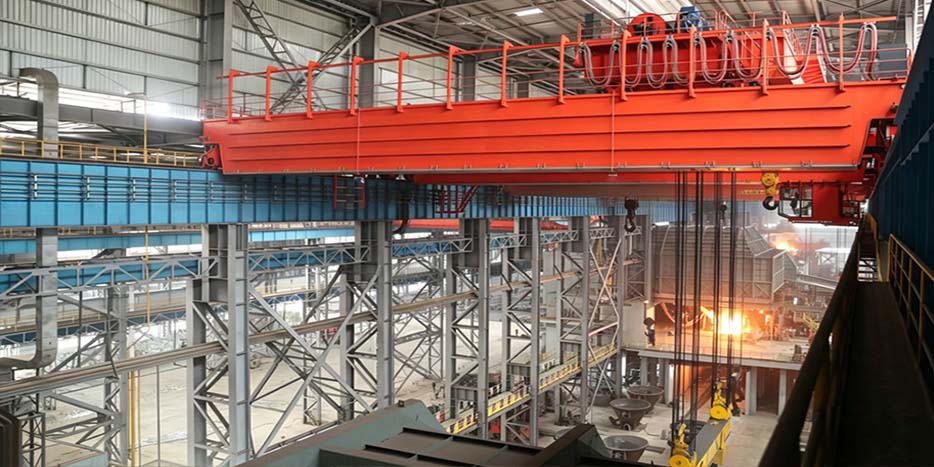
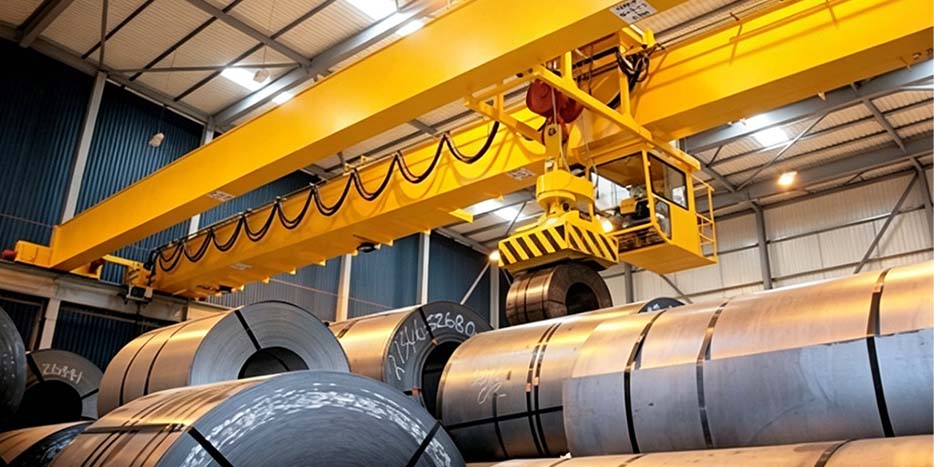
Steel plants do not use cranes the same way as normal factories. This is one of the biggest mistakes people make when discussing steel plant projects. A crane that works well in a warehouse may fail quickly in a steel mill.Not because the crane is bad, but because the working conditions are completely different. In steel production, the crane is often part of the process itself.If the crane stops, production may stop as well. That changes everything about the design. Steel plants are usually high-duty environments In many steel plants, cranes run almost continuously. Typical operations include: Handling steel coils Moving billets and slabs Scrap charging Ladle handling Equipment maintenance These are not light-duty tasks. The crane may run: Frequently At high temperatures Under dust-heavy conditions Around the clock Because of this, duty classification becomes extremely important. In many cases, standard workshop crane configurations are simply not enough. Temperature affects more than most buyers expect Heat is one of the biggest challenges in steel plants. Especially near: Furnaces Continuous casting lines Hot rolling areas High temperature affects: Motors Electrical systems Cable lifespan Lubrication performance This is why steel plant cranes often require: Heat-resistant cables Insulated protection Special motor protection Additional ventilation Without these measures, failures happen much earlier. Custom Solution Stability matters more when handling steel products Steel products are heavy, long, and sometimes unstable. For example: Steel coils Long billets Scrap buckets These loads create more sway and impact force during movement. In many steel plants, double girder cranes are preferred because they provide: Better stability Higher structural strength Better lifting height More precise positioning The goal is not just lifting capacity.The goal is safe and controlled handling. Crane speed should match the production rhythm This part is often underestimated. In steel plants, cranes are connected to production flow. If the crane is too slow, efficiency drops.If the crane moves too aggressively, safety risks increase. That is why many steel plant cranes use: Variable frequency drives Smooth acceleration and deceleration Anti-sway control The crane should move with control, not just speed. Custom Solution Maintenance access is critical A steel plant is not an easy place for maintenance work. Dust, heat, and continuous operation make maintenance more difficult. This is why good crane design should also consider: Easy inspection access Component replacement Maintenance safety In many projects, maintenance convenience becomes more important after installation than during purchasing. Different steel plant areas require different crane designs Not all steel plant cranes are the same. For example: Scrap handling area Usually requires: Heavy-duty operation Grab bucket system High impact resistance Rolling mill area More focus on: Precision Speed coordination Continuous handling Maintenance workshop Often uses: General overhead cranes Medium-duty configuration The crane should match the actual process, not just the lifting capacity. Final Thoughts In steel plants, crane selection is not only about lifting weight. The real challenge is reliability under continuous and demanding operation. A crane may look similar from the outside, but the internal configuration can be completely different depending on: Temperature Duty level Production process Maintenance requirements That is why steel plant projects should never be approached like ordinary factory lifting systems. Contact Our Engineering Team Related Posts
Single Girder vs Double Girder Crane: Which One Should You Choose?
Many buyers ask this question early: Should I choose single girder or double girder? At first glance, the answer seems simple. Single girder costs less.Double girder is stronger. But in real projects, the decision is not that simple. Start from how the crane will be used Before comparing structures, think about usage. How often will the crane run How heavy is the load in daily work Is the operation critical to production If the crane is used occasionally, a single girder is usually enough. If the crane runs frequently or supports production, a double girder is often the safer choice. Capacity is not the only factor Many people decide like this: Below 20 tons → single girderAbove 20 tons → double girder This is common, but not always correct. A 15-ton crane with high frequency may still need a double girder.A 25-ton crane with light usage may still work with a single girder. What matters is not just capacity, but how the crane works every day. Custom Solution Lifting height often decides the structure This point is often ignored. Double girder cranes usually provide more lifting height. Single girder cranes lose some height because of the hoist position. If your project has limited space but needs higher lifting height,double girder is usually the better choice. Stability and operation feel different This is something operators notice quickly. Double girder cranes: More stable Less sway Better for precise positioning Single girder cranes: Lighter Simpler Good for basic lifting tasks If your operation requires accuracy or handles heavy components, stability matters. Custom Solution Cost is not just the purchase price Single girder cranes are cheaper at the beginning. That is true. But you also need to think about: Maintenance Wear and tear Future upgrades In some projects, a double girder crane costs more upfront but performs better over time. Choosing only based on price can lead to higher long-term cost. Installation and building requirements Single girder cranes: Lighter load on the building Easier installation Double girder cranes: Heavier structure Higher requirement for runway beams If your building is already fixed, this can affect your choice. Final Thoughts There is no universal answer. Single girder is not “better” or “worse”.Double girder is not always necessary. The right choice depends on: Usage frequency Lifting requirements Space conditions Long-term operation In many real projects, the wrong choice is not obvious at the beginning.It becomes clear after months of use. That is why structure selection should be based on how the crane will actually work, not just initial cost. Contact Our Engineering Team Related Posts