
Typical Overhead Crane Solution for Steel Plants
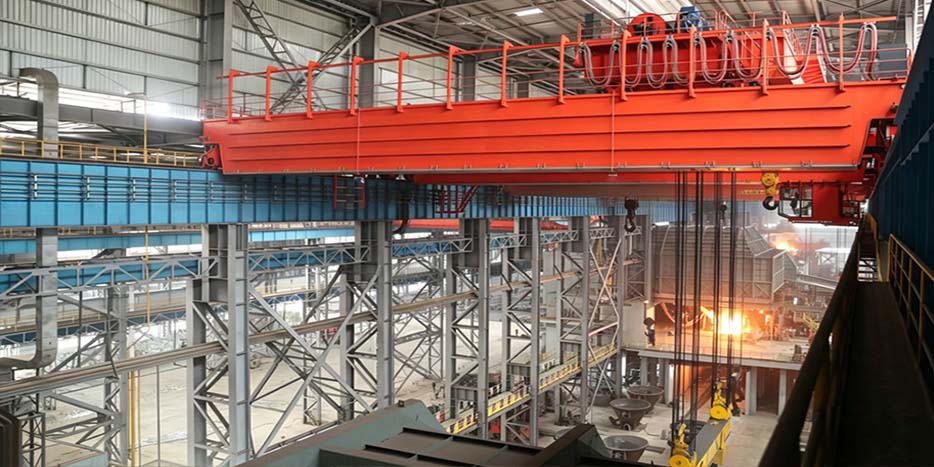
Steel plants do not use cranes the same way as normal factories. This is one of the biggest mistakes people make when discussing steel plant projects. A crane that works well in a warehouse may fail quickly in a steel mill.Not because the crane is bad, but because the working conditions are completely different. In steel production, the crane is often part of the process itself.If the crane stops, production may stop as well. That changes everything about the design. Steel plants are usually high-duty environments In many steel plants, cranes run almost continuously. Typical operations include: Handling steel coils Moving billets and slabs Scrap charging Ladle handling Equipment maintenance These are not light-duty tasks. The crane may run: Frequently At high temperatures Under dust-heavy conditions Around the clock Because of this, duty classification becomes extremely important. In many cases, standard workshop crane configurations are simply not enough. Temperature affects more than most buyers expect Heat is one of the biggest challenges in steel plants. Especially near: Furnaces Continuous casting lines Hot rolling areas High temperature affects: Motors Electrical systems Cable lifespan Lubrication performance This is why steel plant cranes often require: Heat-resistant cables Insulated protection Special motor protection Additional ventilation Without these measures, failures happen much earlier. Custom Solution Stability matters more when handling steel products Steel products are heavy, long, and sometimes unstable. For example: Steel coils Long billets Scrap buckets These loads create more sway and impact force during movement. In many steel plants, double girder cranes are preferred because they provide: Better stability Higher structural strength Better lifting height More precise positioning The goal is not just lifting capacity.The goal is safe and controlled handling. Crane speed should match the production rhythm This part is often underestimated. In steel plants, cranes are connected to production flow. If the crane is too slow, efficiency drops.If the crane moves too aggressively, safety risks increase. That is why many steel plant cranes use: Variable frequency drives Smooth acceleration and deceleration Anti-sway control The crane should move with control, not just speed. Custom Solution Maintenance access is critical A steel plant is not an easy place for maintenance work. Dust, heat, and continuous operation make maintenance more difficult. This is why good crane design should also consider: Easy inspection access Component replacement Maintenance safety In many projects, maintenance convenience becomes more important after installation than during purchasing. Different steel plant areas require different crane designs Not all steel plant cranes are the same. For example: Scrap handling area Usually requires: Heavy-duty operation Grab bucket system High impact resistance Rolling mill area More focus on: Precision Speed coordination Continuous handling Maintenance workshop Often uses: General overhead cranes Medium-duty configuration The crane should match the actual process, not just the lifting capacity. Final Thoughts In steel plants, crane selection is not only about lifting weight. The real challenge is reliability under continuous and demanding operation. A crane may look similar from the outside, but the internal configuration can be completely different depending on: Temperature Duty level Production process Maintenance requirements That is why steel plant projects should never be approached like ordinary factory lifting systems. Contact Our Engineering Team Related Posts